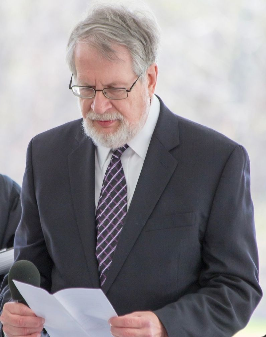
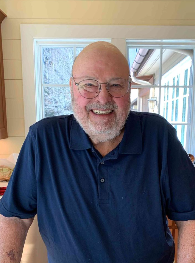
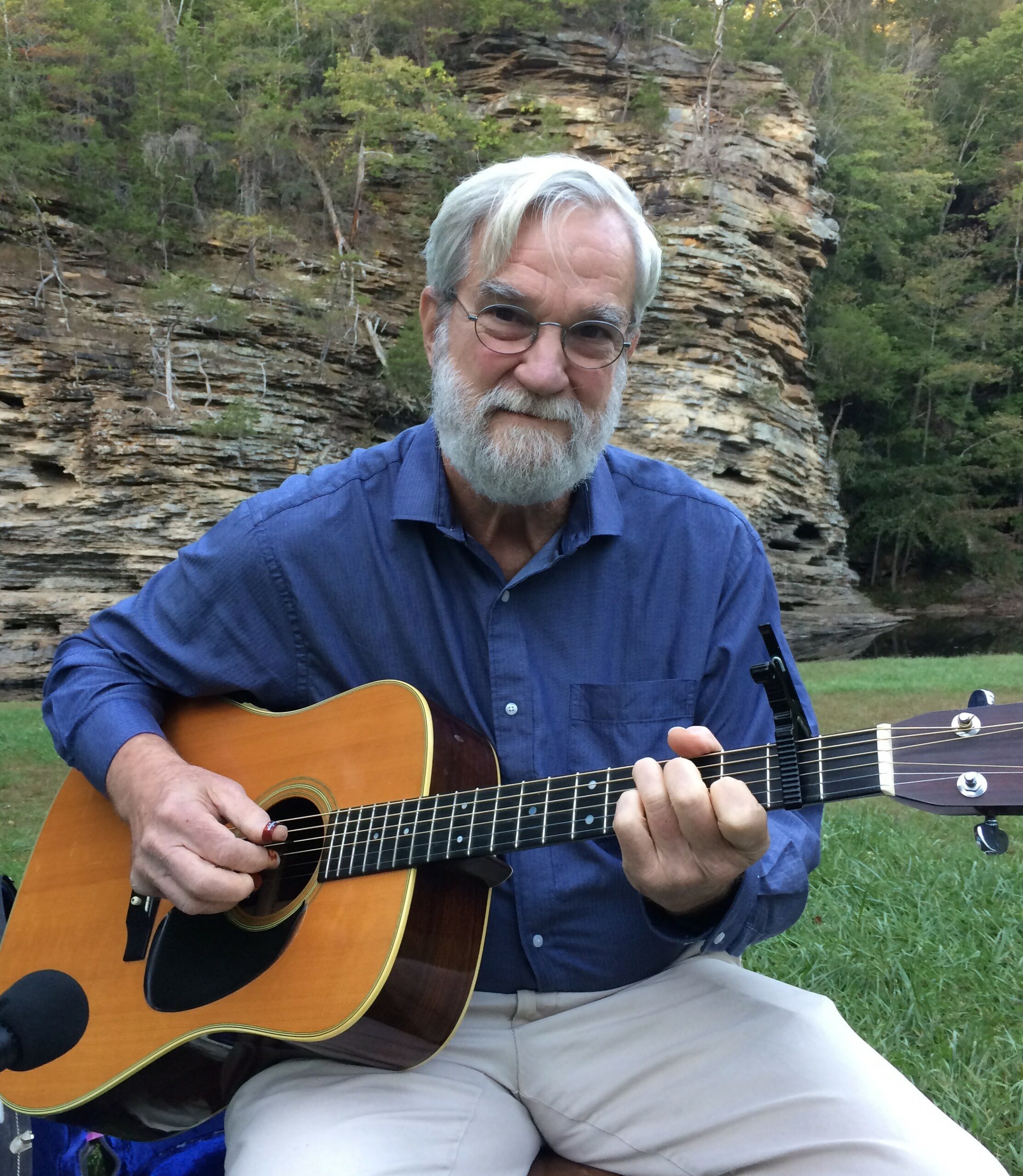
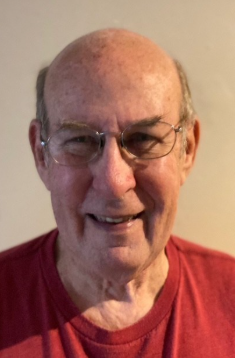
Wilber Wade Caldwell was born November 10, 1944. His parents, Alice Hurt and Wilber R Caldwell, for reasons unbeknownst to them or anyone else, called him Pete.
Brought from Ohio when he was very small, Pete considered himself a lifelong Atlantan. His early years were spent in the Ansley neighborhood; he returned there as a young professional and lived in Ansley for 30 years. He often volunteered for the Piedmont Park Conservancy as a guide.
Pete attended Spring Street Elementary, Grady Middle School, and was in the first graduating class of The Lovett School, where he played football, basketball, and baseball. He then spent four formative, unforgettable years at Davidson College (studying economics and English, and playing only baseball), where he joined the SAEs. The bonds he formed with his fraternity brothers lasted for over 60 years. Following graduation, Pete was, in his words, “treated to a tour of the Far East courtesy of the US Army.” Based in Korea, he served as a courier with the rank of 1st Lieutenant.
Back in Atlanta, working for his family business and playing in a band for fun, Pete met inspired jingle writer and Doppler founder Tom Wells. And so began a thirty-year career in music, a story best told by former-Doppler-employee, then-Doppler-owner, and always-good-friend, Bill Quinn:
[Pete] had the good fortune to partner with Doppler founder Tom Wells to form Doppler Enterprises, a jingle company, and Doppler Studios, a recording facility. When Doppler moved to a location on Peachtree Street, business flourished.
In 1974 Tom Wells opened a Doppler office in Los Angeles where he wrote the theme music for “WKRP in Cincinnati” and other TV shows and movies.
Back in Atlanta, Pete became a full-time producer of jingles and musical scores. He produced jingles for banks, department stores, amusement parks, fast food chains, snuff, chain saws, bread companies, life insurance, chewing tobacco, mouthwash, pest control companies, soft drinks, and more, for local, regional, and national clients. He hired composers, arrangers, musicians, singers, and voice talent. As the jingle company prospered, the studio business also grew and Doppler needed more space, moving to its final location on Piedmont Circle. In 1984, in a bold move, Doppler expanded the building, nearly doubling the space. Under Pete’s leadership and guidance, Doppler became the largest audio facility in the Southeast, with seven studios and a creative wing for writers and arrangers. The music studios were world class and would host recording artists including Pearl Jam, Mariah Carey, OutKast, Whitney Houston, Aerosmith, Beyonce and many more. Doppler recorded sound for film and TV, radio commercials, corporate presentations, and podcasts. President Jimmy Carter recorded Grammy Award winning audio books at Doppler. For some three decades the rooms and hallways were filled with writers, producers, actors, musicians, directors, vocalists and more. Doppler in those days was a special place in the creative scene in Atlanta.
Beyond Atlanta, Pete was active in SPARS, the national organization of audio recording professionals, serving as its President, 1990-1991, and as Chairman of the Board, 1991-1992. He received this tribute following his service: “A Man Whose Example and Commitment Have Guided Our Industry. A Friend respected For His Wit, Southern Warmth and Articulate Communicates. A Leader Whose Dedication and Insight Continue to Perpetuate the Advancement of The Society of Professional Audio Recording Studios.” In 1996, when Pete decided music was “a young man’s business,” and left Doppler for retirement, his employees gifted him a plaque which reads: “Pete Caldwell, A Man of Leadership, Integrity, and Style. His guiding influence produced happy employees, loyal customers, and growth and prosperity in an ever-changing sea of music and technology. We thank him from the bottom of our hearts.” Both descriptions speak the truth.
Post sound recording career, Pete began a new life, buying land north of Atlanta and building himself a mountain retreat where he followed new and old pursuits: cooking, gardening, writing software, building model railroad layouts, and authoring books. Meanwhile, the team sports of his youth, which as a young man had given way to tennis and running 25 miles a week, now gave way to walking the hills and ridges of North Georgia. Some folks would call it hiking–the half mile drive up to Pete’s house also had an elevation of 500 feet. The daily walk he took meant trekking back up the hill. He was religious about it.
A word about the industrious gardening and cooking… Pete planted irises, roses, gladiolus, and towering sunflowers on the landscaped berm beside his house. Every spring, he folded his 6’1 frame down to its hands and knees to weed and prep the earth for the vegetable section, which produced tomatoes, squash, and peppers. Herbs grew most of the year. Much of this ended up in the many dishes Pete prepared daily. With over 90 cookbooks, Pete took “if you can read, you can cook” to a higher level. Dinner might be: cous-cous; moussaka; pasta or scallopini from Marcella Hazan; barbecued chicken with vegetables from the grill; tacos or a mole; a French spring lamb stew; authentic Chinese, or Indian, dishes (ingredients sourced on expeditions along the Buford Highway). Pete also enjoyed creating hors d’oeuvres (“little stuffed things” according to one friend) and was an excellent pastry chef. One memorable Friday night supper was built around a venison tenderloin from a local friend. Pete turned that into “Deer Wellington” which was preceded by a first course of Oysters Rockefeller. One did not turn down an invitation to dinner at Pete Caldwell’s.
Technology also occupied much of his time. Back in the eighties, seeing the possibilities it could bring, Pete bought himself a computer and taught himself the software languages of those early days. He was asked to give talks, including one at Dartmouth College, on the application of this then-incipient technology to the music industry. In retirement, he explored its other possibilities, writing a software program for a robotic arm, then building the arm to prove it would work, or writing a program for elevators (how do they know where to stop and wait for the next call?) and a set of mini elevators to prove that. The train project, run by special software, was much grander. His first layout took up half the garage. The trains ran on a chest-high platform, with the wiring, all done by Pete, underneath. That took several entertaining years, but eventually it was completed. Thinking he could improve on this first experience, Pete decided he needed a bigger, better train room, and added a third building to his property–the basement would be dedicated to his railroad creation. Both train rooms had walls painted (by Pete) with sky and clouds to provide the backdrop for the hills and valleys of farms and villages that populated the deep and winding train platform. There were tiny cows grazing, tiny fences, tiny cars and trucks, tiny depots, tiny buildings, tiny people doing things like hanging laundry. There were tiny trees, and grass, and ponds, and rivers. (See altamontandblueridge.com) And to run the seven or eight tiny trains, there were two computers. A viewing of the trains began with a sunrise and Pete’s recorded narration as the trains ran the tracks. This new room was 22 by 38 (836 sq) feet. First time visitors gaped.
Lest the above pursuits seem trivial, during the 25 years Pete was “retired,” he became Wilber W Caldwell, the author of a dozen books, eight of which are published. (He sometimes remarked that he did not know how he had ever had time to work.) His first published book was The Courthouse and the Depot, The Architecture of Hope in an Age of Despair. Its over-500 pages constitute “a narrative catalogue of Georgia’s 19th century public architecture and a complete history of the tiny railroad lines that covered the state in this period. The book contains more than 300 photographs, 33 maps, 3 appendixes and an extensive index.” Its writing was well underway while Pete was still working, yet he found time for many hours of pre-Google research, and visits to Georgia’s 159 counties. All of them.
As Pete traveled the state, researching and taking photos of depots and courthouses, he began taking photos of barbecue joints along the way, many, many photos. They became the basis for another book, Searching for the Dixie Barbecue – Journeys into the Southern Psyche, Pete’s tongue-in-cheek look at a beloved Southern tradition. (Barbecue fanatics were not amused.)
On a more contemplative note, Pete produced Cynicism and the Evolution of the American Dream, a deeper book of social commentary. After an introduction to Latin American literature, he was inspired to write American Narcissism: The Myth of National Superiority. Then came a novel, 1968: Dreams of Revolution, on student activism and upheaval from New York to Paris to Germany. Conceived some 15 years earlier, Consumer Culture in America: Spectacle, Deception and Illusion in the Marketplace came out in 2024. The spring of 2025 saw the publication of Whistling Dixie: A Linguistic Journey, which takes the reader from the very origins of human speech all the way through to the author’s delightful examination of the Southern drawl, Southern expressions, and his own personal speech.
Wilber W Caldwell’s most recent—and posthumous–work is a deep consideration of AI in our world today, The Work of Art in the Age of Artificial Intelligence. He was twice nominated for Georgia Author of the Year.
Wilber Wade Caldwell died on October 15, 2025, from complications following surgery for esophageal cancer. He is survived by his wife, Mary Fitzhugh Parra, stepdaughters Natalia (Paul Challan) Parra of Washington, DC, and Maria (Virgile) Peyramaure of New York, who adopted him long before his step-fatherhood became official. He is survived by granddaughter Anna Parra-Jordan—the first baby Pete ever held and who, 23 years later, was there to hold his hand as he left this world. He is also survived by grandson Pablo Challan-Parra of DC, and step-granddaughter Lily Peyramaure of Paris, France, along with the whole of the Fitzhugh clan whose sheer numbers so amused him. Pete is survived by his sister Cheslie (Joe) Lachnicht, his nephews Peter (Lauren) and Christopher Lachnicht, of Marietta, Georgia, their families, as well as by his first wife, Carol Caldwell of Nashville, Tennessee. He is survived in friendship by many—David Bailey and Wes Stone; the whole of the Dopler gang; SPARS cohorts David Porter and Bruce Merley; and his Davidson SAEs, all good men and true.
One of the last things Pete Caldwell said was “I have lived an extraordinary life.” He did indeed. And it was a life well-lived by an extraordinary person.
______________
If you would like to honor Wilber W Caldwell’s memory, Davidson College and the Atlanta Symphony were the causes closest to his heart.